Table of Contents
- Introduction
- How Exhibition Catering Is Different
- Understanding Visitors and Exhibitors
- Choosing Food for an Exhibition
- Planning Food Around Visitor Traffic
- Catering for Individual Exhibition Stalls
- Managing Venue and Stall Restrictions
- Food Safety and Clean Service
- Handling Replenishment and Waste
- Common Exhibition Catering Mistakes
- Choosing an Exhibition Caterer
- Conclusion
- FAQs
𝗘𝘅𝗵𝗶𝗯𝗶𝘁𝗶𝗼𝗻 𝗖𝗮𝘁𝗲𝗿𝗶𝗻𝗴 𝗖𝗵𝗲𝗻𝗻𝗮𝗶
𝗜𝗻𝘁𝗿𝗼𝗱𝘂𝗰𝘁𝗶𝗼𝗻
An exhibition can bring hundreds or even thousands of people into the same venue over a short period. Visitors move between stalls, exhibitors speak with potential customers, teams demonstrate products and organisers manage a continuous flow of people.
Food service in this environment has a different purpose from catering at a traditional function. People may not sit down for a long meal. They may want a quick beverage between meetings, a small snack while walking through the venue or a proper meal during a scheduled break.
That makes 𝗘𝘅𝗵𝗶𝗯𝗶𝘁𝗶𝗼𝗻 𝗖𝗮𝘁𝗲𝗿𝗶𝗻𝗴 𝗖𝗵𝗲𝗻𝗻𝗮𝗶 a planning exercise that combines menu selection, speed, hygiene, location, replenishment and crowd management.
A successful arrangement should make food accessible without interfering with exhibition activities. The catering setup should fit naturally into the movement of visitors and exhibitors.
𝗛𝗼𝘄 𝗘𝘅𝗵𝗶𝗯𝗶𝘁𝗶𝗼𝗻 𝗖𝗮𝘁𝗲𝗿𝗶𝗻𝗴 𝗜𝘀 𝗗𝗶𝗳𝗳𝗲𝗿𝗲𝗻𝘁
The biggest difference is the unpredictable movement of guests.
At a wedding or private function, the approximate meal time is usually known. An exhibition can be different. Some visitors arrive early, some come during peak hours and others may leave without having a full meal.
Food service therefore needs flexibility.
Instead of preparing one large service window, organisers can consider multiple refreshment periods. Beverage stations can remain available for longer, while heavier food can be scheduled around expected visitor breaks.
𝗘𝘅𝗵𝗶𝗯𝗶𝘁𝗶𝗼𝗻 𝗖𝗮𝘁𝗲𝗿𝗶𝗻𝗴 𝗖𝗵𝗲𝗻𝗻𝗮𝗶
should also account for the fact that exhibitors may spend many hours at their stalls. Their requirements can be different from those of visitors who may stay for only a few hours.
𝗨𝗻𝗱𝗲𝗿𝘀𝘁𝗮𝗻𝗱𝗶𝗻𝗴 𝗩𝗶𝘀𝗶𝘁𝗼𝗿𝘀 𝗔𝗻𝗱 𝗘𝘅𝗵𝗶𝗯𝗶𝘁𝗼𝗿𝘀
Before selecting the menu, organisers should divide the expected audience into practical groups.
Visitors may need quick refreshments that can be consumed without taking too much time away from exploring the exhibition. Exhibitors and staff may require more substantial meals because they remain at the venue throughout the day.
VIP guests, speakers and invited business partners may require a separate hospitality arrangement.
The expected age group and professional background can also influence the menu. A trade exhibition for industrial equipment may have different food preferences from a lifestyle, education, technology or consumer exhibition.
Understanding these differences helps avoid a common problem: creating one menu and expecting it to suit everyone equally.
𝗖𝗵𝗼𝗼𝘀𝗶𝗻𝗴 𝗙𝗼𝗼𝗱 𝗙𝗼𝗿 𝗔𝗻 𝗘𝘅𝗵𝗶𝗯𝗶𝘁𝗶𝗼𝗻
The best exhibition menu is not necessarily the largest one. It is the menu that works well with the way people move through the venue.
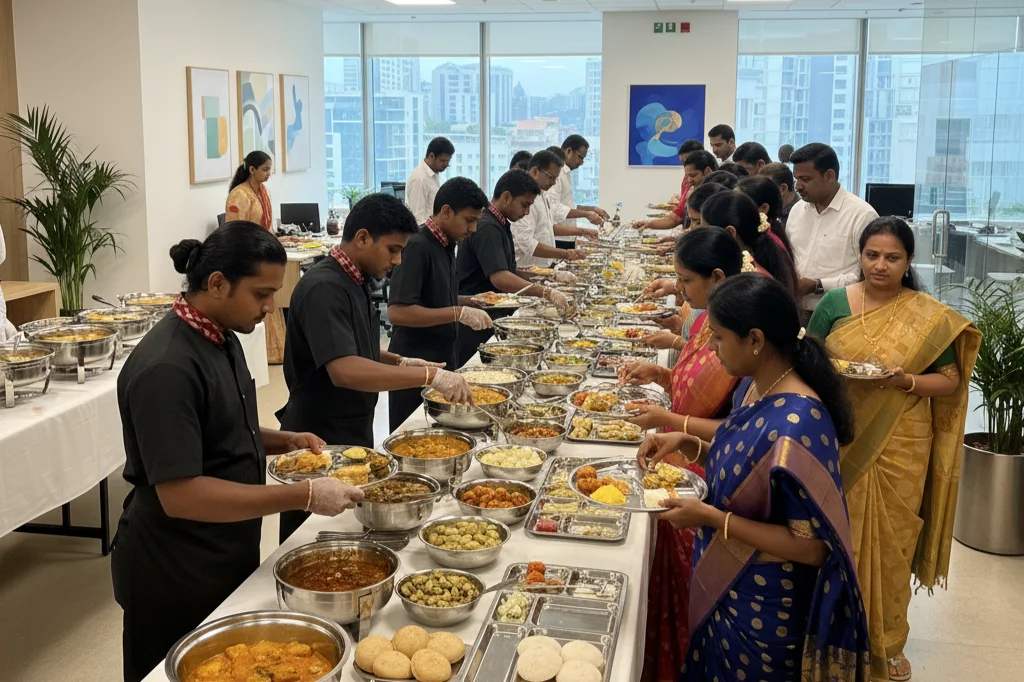
Small savouries, mini sandwiches, wraps, rolls, cut fruits, sweets and other easy-to-handle portions can be useful during busy exhibition hours.
For breakfast service, options such as idli, pongal, mini dosa, sandwiches, fruits and beverages can be considered depending on the audience.
For lunch, organisers may choose a compact buffet, meal boxes or a faster serving arrangement when seating capacity is limited.
Evening service can include tea, coffee, fresh juices and selected snacks. If the event includes a dedicated networking session, a more elaborate menu may be suitable.
𝗘𝘅𝗵𝗶𝗯𝗶𝘁𝗶𝗼𝗻 𝗖𝗮𝘁𝗲𝗿𝗶𝗻𝗴 𝗖𝗵𝗲𝗻𝗻𝗮𝗶 should always be planned according to the venue, event duration, visitor profile and service format rather than simply adding more dishes.
𝗣𝗹𝗮𝗻𝗻𝗶𝗻𝗴 𝗙𝗼𝗼𝗱 𝗔𝗿𝗼𝘂𝗻𝗱 𝗩𝗶𝘀𝗶𝘁𝗼𝗿 𝗧𝗿𝗮𝗳𝗳𝗶𝗰
Visitor traffic can change dramatically during an exhibition.
For example, a popular presentation may finish and release a large number of people at once. A seminar inside the exhibition hall may create another sudden demand for refreshments during its break.
If the catering team does not anticipate these traffic patterns, long queues can develop quickly.
Organisers should identify peak periods from the exhibition timetable and prepare additional service capacity for those windows. Multiple beverage points may be more useful than one large counter when the venue is spread across different halls.
The location of each counter also matters. A food station placed too close to a busy entrance can obstruct movement, while a counter positioned far from the main visitor area may remain underused.
𝗖𝗮𝘁𝗲𝗿𝗶𝗻𝗴 𝗙𝗼𝗿 𝗜𝗻𝗱𝗶𝘃𝗶𝗱𝘂𝗮𝗹 𝗘𝘅𝗵𝗶𝗯𝗶𝘁𝗶𝗼𝗻 𝗦𝘁𝗮𝗹𝗹𝘀
Not every exhibition catering requirement comes from the main organiser.
Individual exhibitors may want refreshments for their clients, distributors, business partners or invited guests.
A stall may need coffee service, bottled beverages, snack boxes or small food portions that can be served directly to visitors. In such cases, the service needs to be compact and easy to manage within the available stall space.
Exhibitors should communicate their expected guest numbers and preferred service timings early. This makes it easier for the caterer to plan preparation and delivery.
𝗠𝗮𝗻𝗮𝗴𝗶𝗻𝗴 𝗩𝗲𝗻𝘂𝗲 𝗔𝗻𝗱 𝗦𝘁𝗮𝗹𝗹 𝗥𝗲𝘀𝘁𝗿𝗶𝗰𝘁𝗶𝗼𝗻𝘀
Exhibition venues often have strict operational rules.
There may be limitations on cooking inside the hall, use of heating equipment, electrical connections, water access, waste disposal and delivery timings. Some venues may also require caterers to use designated service entrances.
These details should be confirmed before the event.
The catering team should know where preparation can take place, how equipment can enter the venue and where waste can be collected. Without this information, even a well-designed food plan can become difficult to execute.
A venue inspection or detailed coordination call before the exhibition can help identify these practical limitations.
𝗙𝗼𝗼𝗱 𝗦𝗮𝗳𝗲𝘁𝘆 𝗔𝗻𝗱 𝗖𝗹𝗲𝗮𝗻 𝗦𝗲𝗿𝘃𝗶𝗰𝗲
Exhibition halls can become crowded and warm, particularly when many visitors are present. Food handling therefore requires careful attention.
Hot dishes should be maintained appropriately, chilled foods should be handled safely and exposed food should not remain unattended for extended periods.
Serving counters should be kept clean throughout the event. Used cups, plates and tissues should be removed regularly to prevent the catering area from becoming untidy.
Hand hygiene, clean serving equipment and proper food handling are particularly important when large numbers of people are being served.
For 𝗘𝘅𝗵𝗶𝗯𝗶𝘁𝗶𝗼𝗻 𝗖𝗮𝘁𝗲𝗿𝗶𝗻𝗴 𝗖𝗵𝗲𝗻𝗻𝗮𝗶, hygiene planning should be treated as part of event management rather than as an afterthought.
𝗛𝗮𝗻𝗱𝗹𝗶𝗻𝗴 𝗥𝗲𝗽𝗹𝗲𝗻𝗶𝘀𝗵𝗺𝗲𝗻𝘁 𝗔𝗻𝗱 𝗪𝗮𝘀𝘁𝗲
Exhibition catering requires continuous observation.
If one snack becomes popular, it may disappear much faster than other menu items. The catering team should monitor consumption and replenish high-demand items without allowing other food to remain untouched for unnecessarily long periods.
The same principle applies to beverages. Tea, coffee and water may require frequent replenishment depending on the crowd.
Waste collection should be planned alongside food service. Bins should be positioned conveniently without affecting the visual appearance of the exhibition.
A clean service area helps the entire exhibition feel more organised and professional.
𝗖𝗼𝗺𝗺𝗼𝗻 𝗘𝘅𝗵𝗶𝗯𝗶𝘁𝗶𝗼𝗻 𝗖𝗮𝘁𝗲𝗿𝗶𝗻𝗴 𝗠𝗶𝘀𝘁𝗮𝗸𝗲𝘀
One frequent mistake is estimating food quantity only from the total registration number. Registered visitors do not necessarily arrive at the same time, and some may not use the catering service.
Another problem is having too few beverage stations. A single counter can create unnecessary queues during peak periods.
Some organisers also select dishes that are difficult to eat while standing or moving between stalls. Food should match the environment.
Ignoring exhibitor requirements is another issue. Exhibitors may stay at the venue longer than regular visitors and need separate meal planning.
Poor coordination with the venue can create operational problems, especially when cooking, equipment movement or delivery access is restricted.
Finally, focusing only on menu variety while overlooking manpower can lead to slow service. An exhibition needs a catering team that can respond quickly when visitor traffic changes.
𝗖𝗵𝗼𝗼𝘀𝗶𝗻𝗴 𝗔𝗻 𝗘𝘅𝗵𝗶𝗯𝗶𝘁𝗶𝗼𝗻 𝗖𝗮𝘁𝗲𝗿𝗲𝗿
When selecting a catering partner, organisers should explain the complete exhibition format instead of requesting only a menu quotation.
Share the expected visitor count, exhibitor count, event duration, venue details, number of halls, expected peak periods and preferred service style.
Ask about staffing, replenishment, beverage service, equipment, waste management and venue coordination.
A caterer experienced in large gatherings should be able to adjust service according to changing crowd movement. This flexibility can be especially valuable when an exhibition runs for several hours.
𝗕𝘂𝗱𝗴𝗲𝘁 𝗣𝗹𝗮𝗻𝗻𝗶𝗻𝗴 𝗙𝗼𝗿 𝗔𝗻 𝗘𝘅𝗵𝗶𝗯𝗶𝘁𝗶𝗼𝗻
The catering budget should include more than the price of ingredients.
Service staff, transportation, serving equipment, beverage stations, setup, clearing and special food requirements can all affect the total cost.
A practical budget can be divided according to different guest groups. Visitors may receive light refreshments, while exhibitors and staff may require breakfast and lunch. VIP hospitality can be planned separately if required.
The organiser should also decide whether the catering is complimentary or available through paid counters. This decision can influence staffing, menu design and the overall service model.
𝗖𝗵𝗲𝗰𝗸𝗹𝗶𝘀𝘁 𝗕𝗲𝗳𝗼𝗿𝗲 𝗧𝗵𝗲 𝗘𝘅𝗵𝗶𝗯𝗶𝘁𝗶𝗼𝗻
Before finalising the catering arrangement, confirm the expected visitor numbers and exhibitor count.
Review the venue’s catering rules and access procedures.
Map the locations of food and beverage stations.
Identify peak visitor periods.
Separate exhibitor meals from general visitor refreshments if necessary.
Confirm dietary requirements.
Decide how waste will be collected.
Confirm setup and dismantling times with the venue.
Share the exhibition schedule with the catering team.
Keep a contact person available for quick decisions during the event.
These simple checks can prevent avoidable service problems on the exhibition day.
𝗪𝗵𝘆 𝗣𝗿𝗼𝗽𝗲𝗿 𝗘𝘅𝗵𝗶𝗯𝗶𝘁𝗶𝗼𝗻 𝗖𝗮𝘁𝗲𝗿𝗶𝗻𝗴 𝗜𝗺𝗽𝗿𝗼𝘃𝗲𝘀 𝗧𝗵𝗲 𝗘𝘃𝗲𝗻𝘁
Good food service gives visitors a convenient reason to pause, refresh and continue exploring the exhibition.
For exhibitors, dependable catering reduces the need for staff to leave their stalls for long periods. For organisers, efficient food service helps maintain the overall rhythm of the event.
That is why 𝗘𝘅𝗵𝗶𝗯𝗶𝘁𝗶𝗼𝗻 𝗖𝗮𝘁𝗲𝗿𝗶𝗻𝗴 𝗖𝗵𝗲𝗻𝗻𝗮𝗶 should be planned around people movement, not simply around the number of dishes being served.
A well-positioned counter, a practical menu and sufficient service staff can make a noticeable difference to the experience of both visitors and exhibitors.
𝗖𝗼𝗻𝗰𝗹𝘂𝘀𝗶𝗼𝗻
Exhibition catering requires a different approach because guests rarely follow one fixed meal pattern. Visitors arrive at different times, exhibitors remain at their stalls for extended periods and crowd levels can change quickly.
𝗘𝘅𝗵𝗶𝗯𝗶𝘁𝗶𝗼𝗻 𝗖𝗮𝘁𝗲𝗿𝗶𝗻𝗴 𝗖𝗵𝗲𝗻𝗻𝗮𝗶 should therefore combine convenient food, well-planned service points, suitable timing, hygiene, quick replenishment and proper venue coordination.
When these details are planned before the event, catering can support the exhibition without creating unnecessary queues, congestion or service delays.
Need Catering Support for Your Office Meetings?
Contact Karuda Hospitality today for premium corporate catering services in Tambaram.
FAQs
What is suitable for exhibition catering in Chennai?
Light snacks, beverages, convenient portions, breakfast items, meal options and selected buffet dishes can be planned according to the exhibition format and guest profile.
How is exhibition catering different from regular event catering?
Exhibitions have continuous visitor movement, changing crowd levels and different requirements for visitors, exhibitors and staff. Catering therefore needs flexible service and careful placement of food stations.
Can food be served directly at exhibition stalls?
Yes. Exhibitors can arrange compact refreshments, beverages or snack services for their invited customers and business guests, subject to venue rules.
How should food quantity be estimated for an exhibition?
Food planning should consider registered visitors, expected attendance, exhibitor requirements, event duration, peak traffic periods and the type of service being offered.
Can exhibition catering include vegetarian and special dietary options?
Yes. Vegetarian choices and other dietary requirements can be incorporated when the organiser provides the relevant information during menu planning.
Why is catering location important at an exhibition?
Food counters placed in the wrong location can create queues and interfere with visitor movement. Catering points should be positioned according to traffic flow and venue layout.
How can I arrange exhibition catering in Chennai?
Share the venue, guest count, exhibition schedule, stall requirements, service style and menu preferences with a catering team so the food service can be planned around the event.
Hotel Karuda
For Booking
Contact
+91 80562 78333, +91 99402 85404
No. 3, vaithiyalingam salai,
Bharathiyar Nagar,
Rajendran Nagar,
Neelankarai,
Chennai – 600115