
Table of Contents
- Introduction
- Understand The Purpose Of The Temple Function
- Build A Traditional Menu That Works
- Plan Food Around The Function Timing
- Estimate Food Requirements Carefully
- Choose The Right Serving Arrangement
- Give Hygiene And Food Handling Priority
- Plan Prasadam And Special Offerings
- Prepare For Temple Venue Requirements
- Choose A Caterer With Event Experience
- Conclusion
- FAQs
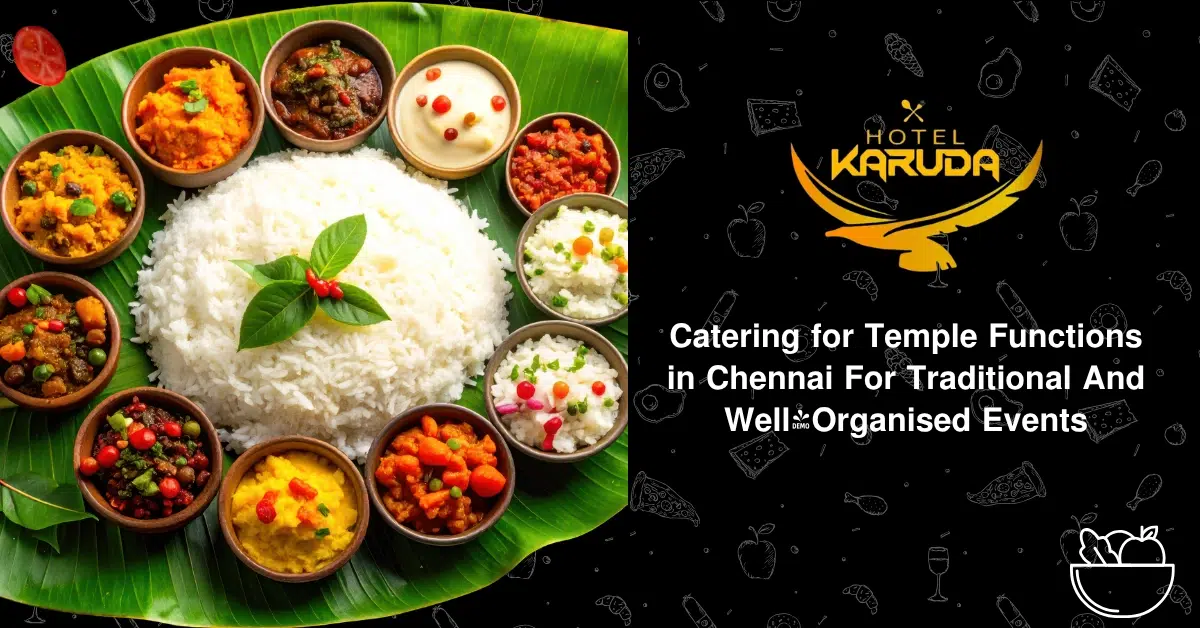
𝗖𝗮𝘁𝗲𝗿𝗶𝗻𝗴 𝗳𝗼𝗿 𝗧𝗲𝗺𝗽𝗹𝗲 𝗙𝘂𝗻𝗰𝘁𝗶𝗼𝗻𝘀 𝗶𝗻 𝗖𝗵𝗲𝗻𝗻𝗮𝗶 𝗙𝗼𝗿 𝗧𝗿𝗮𝗱𝗶𝘁𝗶𝗼𝗻𝗮𝗹 𝗔𝗻𝗱 𝗪𝗲𝗹𝗹-𝗢𝗿𝗴𝗮𝗻𝗶𝘀𝗲𝗱 𝗘𝘃𝗲𝗻𝘁𝘀
𝗜𝗻𝘁𝗿𝗼𝗱𝘂𝗰𝘁𝗶𝗼𝗻
Temple functions have a character of their own. The atmosphere is traditional, the food is often closely connected with the occasion, and the meal may be served to a large number of people within a limited period. That makes food planning an important part of the overall arrangement.
Catering for Temple Functions in Chennai requires more than preparing a regular menu in larger quantities. The food may need to follow traditional preferences, specific serving practices and the timing of the religious or community event.
From choosing suitable dishes to arranging cooking, serving and cleaning, every detail needs to work smoothly around the temple schedule. A practical catering plan can help organisers serve guests comfortably while respecting the nature of the occasion.
𝗨𝗻𝗱𝗲𝗿𝘀𝘁𝗮𝗻𝗱 𝗧𝗵𝗲 𝗣𝘂𝗿𝗽𝗼𝘀𝗲 𝗢𝗳 𝗧𝗵𝗲 𝗧𝗲𝗺𝗽𝗹𝗲 𝗙𝘂𝗻𝗰𝘁𝗶𝗼𝗻
Not every temple gathering has the same food requirements. The event could be connected with a festival, pooja, special prayer, community gathering, religious ceremony or an annual temple celebration.
The purpose and schedule of the function should be understood before selecting the menu. A short morning gathering may need a simple breakfast, while a longer celebration may require a complete traditional meal.
The organiser should also clarify whether the food is intended for devotees, invited guests, volunteers, temple staff or a combination of groups.
Understanding who will be served gives the caterer a better starting point for menu planning, portion estimation and service arrangements.
𝗨𝗻𝗱𝗲𝗿𝘀𝘁𝗮𝗻𝗱𝗶𝗻𝗴 𝘁𝗵𝗲 𝗧𝗲𝗺𝗽𝗹𝗲 𝗘𝘃𝗲𝗻𝘁 𝗥𝗲𝗾𝘂𝗶𝗿𝗲𝗺𝗲𝗻𝘁𝘀
Traditional functions often require a food arrangement that feels appropriate for the occasion rather than a menu designed simply for variety.
A South Indian vegetarian meal can include rice, sambar, rasam, vegetable preparations, kootu, poriyal, curd, pickle, papad and traditional sweets. The exact combination should be decided according to the function and the preferences of the organisers.
When the menu has a clear purpose, the kitchen team can concentrate on preparing each dish properly instead of managing an unnecessarily large number of items.
𝗕𝘂𝗶𝗹𝗱 𝗔 𝗧𝗿𝗮𝗱𝗶𝘁𝗶𝗼𝗻𝗮𝗹 𝗠𝗲𝗻𝘂 𝗧𝗵𝗮𝘁 𝗪𝗼𝗿𝗸𝘀
A temple function menu does not need to be complicated to be satisfying. In many cases, familiar traditional dishes can create a more suitable dining experience than an overloaded menu.
The meal can be structured around the occasion. Breakfast options may include idli, pongal, vada, dosa or other suitable dishes. A lunch arrangement can focus on rice-based meals with traditional accompaniments and sweets.
If a special dish has cultural or family significance, discuss it with the catering team before finalising the menu. This allows the kitchen to plan ingredients and preparation methods properly.
A focused menu also makes it easier to maintain consistency when food needs to be served to many people within a short period.
𝗣𝗹𝗮𝗻 𝗙𝗼𝗼𝗱 𝗔𝗿𝗼𝘂𝗻𝗱 𝗧𝗵𝗲 𝗙𝘂𝗻𝗰𝘁𝗶𝗼𝗻 𝗧𝗶𝗺𝗶𝗻𝗴
Timing can completely change the catering plan.
For an early morning temple function, breakfast may need to be ready before or immediately after the main ceremony. For a midday event, the kitchen team needs enough preparation time to ensure the meal reaches the serving area at the right moment.
Evening functions may require snacks, beverages or a lighter meal depending on the schedule.
The catering team should know the expected cooking start time, ceremony schedule, food serving time and approximate duration of the meal. This information helps coordinate preparation without rushing the final stages of cooking.
𝗘𝘀𝘁𝗶𝗺𝗮𝘁𝗲 𝗙𝗼𝗼𝗱 𝗥𝗲𝗾𝘂𝗶𝗿𝗲𝗺𝗲𝗻𝘁𝘀 𝗖𝗮𝗿𝗲𝗳𝘂𝗹𝗹𝘆
One of the biggest challenges in temple catering is estimating how much food will actually be needed.
The organiser should provide the most accurate possible guest estimate and discuss whether devotees or visitors may join the meal without advance confirmation. A temple event may have a different attendance pattern from a private function.
The menu also affects the quantity required. When several main dishes are served, guests may take smaller portions of individual items. When the menu is simple, the quantity of the main dishes may need to be planned differently.
Rather than using a fixed quantity for every event, the caterer should consider the menu, serving style, expected attendance and event duration together.
𝗖𝗵𝗼𝗼𝘀𝗲 𝗧𝗵𝗲 𝗥𝗶𝗴𝗵𝘁 𝗦𝗲𝗿𝘃𝗶𝗻𝗴 𝗔𝗿𝗿𝗮𝗻𝗴𝗲𝗺𝗲𝗻𝘁
The serving method should match the temple venue and the expected crowd.
Banana-leaf service can suit traditional meals and offers a familiar dining experience. Buffet service may be practical when guests arrive at different times or when the venue has sufficient dining space.
The organiser should also consider the movement of guests, serving staff, tables, seating areas and food replenishment.
For a larger temple gathering, the serving process should be organised in a way that avoids unnecessary queues. Food should be replenished at the right time so that guests receive fresh servings throughout the meal.
𝗚𝗶𝘃𝗲 𝗛𝘆𝗴𝗶𝗲𝗻𝗲 𝗔𝗻𝗱 𝗙𝗼𝗼𝗱 𝗛𝗮𝗻𝗱𝗹𝗶𝗻𝗴 𝗣𝗿𝗶𝗼𝗿𝗶𝘁𝘆
Large community meals require careful food handling from preparation to serving.
Ingredients should be stored appropriately, cooking areas should be kept clean and serving vessels should be handled hygienically. Prepared food also needs to be protected from unnecessary exposure before it reaches the dining area.
The catering team should have a clear process for transporting cooked food, maintaining suitable serving conditions and cleaning the cooking and dining areas after the event.
Good hygiene is not only about the kitchen. Serving staff, equipment, water arrangements and waste management also form part of responsible food service.
𝗣𝗹𝗮𝗻 𝗣𝗿𝗮𝘀𝗮𝗱𝗮𝗺 𝗔𝗻𝗱 𝗦𝗽𝗲𝗰𝗶𝗮𝗹 𝗢𝗳𝗳𝗲𝗿𝗶𝗻𝗴𝘀
Some temple functions may include prasadam or a specific food offering connected with the occasion. Such requirements should be discussed separately rather than being added to the general meal plan at the last moment.
The organisers should clearly communicate the required dish, preparation expectations, quantity and distribution method to the catering team.
If prasadam is distributed separately from the main meal, the packaging or serving arrangement may also need additional planning.
Keeping these details clear from the beginning helps the caterer prepare the right ingredients and allocate the required staff and equipment.
𝗣𝗿𝗲𝗽𝗮𝗿𝗲 𝗙𝗼𝗿 𝗧𝗲𝗺𝗽𝗹𝗲 𝗩𝗲𝗻𝘂𝗲 𝗥𝗲𝗾𝘂𝗶𝗿𝗲𝗺𝗲𝗻𝘁𝘀
Every venue has practical limitations. A temple may have a separate kitchen, a temporary cooking area or a restricted space for food preparation.
Before confirming the catering arrangement, check where cooking can take place, how ingredients can be brought into the venue, where food will be served and where used vessels can be cleaned.
Water supply, electricity, cooking equipment, storage space and vehicle access may also need to be discussed.
These details are easy to overlook when planning the menu, but they can significantly affect how smoothly the catering operation runs on the event day.
𝗖𝗵𝗼𝗼𝘀𝗲 𝗔 𝗖𝗮𝘁𝗲𝗿𝗲𝗿 𝗪𝗶𝘁𝗵 𝗘𝘃𝗲𝗻𝘁 𝗘𝘅𝗽𝗲𝗿𝗶𝗲𝗻𝗰𝗲
Temple catering involves more coordination than simply cooking food. The caterer needs to understand the schedule, guest movement, menu requirements and venue limitations.
When discussing the catering requirement, explain the type of temple function, expected attendance, food preferences, serving method and timing.
Ask for clarity about what the catering arrangement covers, including cooking staff, serving staff, equipment, transportation and post-event cleaning where applicable.
For larger gatherings, experienced coordination can make the difference between a stressful food arrangement and a well-managed meal service.
𝗣𝗹𝗮𝗻 𝗧𝗵𝗲 𝗖𝗮𝘁𝗲𝗿𝗶𝗻𝗴 𝗔𝗿𝗿𝗮𝗻𝗴𝗲𝗺𝗲𝗻𝘁 𝗘𝗮𝗿𝗹𝘆
Last-minute catering decisions can create unnecessary pressure, especially when the function involves a large community gathering.
Start by confirming the date, venue, approximate attendance and event schedule. Then discuss the menu, food preparation area, serving method and any special requirements.
Once the main details are agreed upon, the caterer can plan purchasing, kitchen preparation, staff allocation and transportation.
For temple functions, early coordination is particularly useful because the food service needs to fit around the activities happening at the venue.
𝗖𝗼𝗻𝗰𝗹𝘂𝘀𝗶𝗼𝗻
Catering for Temple Functions in Chennai requires thoughtful planning, traditional food understanding and efficient service coordination.
The right menu should suit the purpose of the function, while the food quantity should reflect the expected attendance and serving style. Timing, hygiene, venue facilities and special prasadam requirements should also be discussed before the event.
Need Catering Support for Your Office Meetings?
Contact Karuda Hospitality today for premium corporate catering services in Tambaram.
FAQs
What type of food is suitable for a temple function?
Traditional South Indian vegetarian dishes are commonly suitable for many temple functions, but the final menu should follow the requirements and practices of the specific occasion.
Can catering be arranged for a large temple gathering?
Yes. A catering team can plan food preparation, serving staff, equipment and meal service according to the expected attendance and venue arrangements.
Is banana-leaf service suitable for temple functions?
Banana-leaf service can be a suitable option for traditional meals when the venue has enough seating and serving space.
How early should temple catering be planned?
It is better to discuss the catering requirements in advance so there is enough time to finalise the menu, ingredients, staff, equipment and venue arrangements.
Can a caterer prepare prasadam separately?
Special prasadam requirements can be discussed with the catering team in advance, including the dish, quantity, preparation and distribution method.
What information should I give the caterer?
Share the function date, venue, expected guest count, event timing, menu preferences, serving method and any special food or prasadam requirements.
Does the temple venue affect catering arrangements?
Yes. Kitchen access, electricity, water, storage, cooking space, serving areas and vehicle access can influence how the catering operation is planned.
Hotel Karuda
For Booking
Contact
+91 80562 78333, +91 99402 85404
No. 3, vaithiyalingam salai,
Bharathiyar Nagar,
Rajendran Nagar,
Neelankarai,
Chennai – 600115
