
Table of Contents
- Introduction
- Identify The Type Of School Event
- Plan The Menu Around Students
- Keep The Food Simple And Balanced
- Estimate Food According To Attendance
- Coordinate Food With The School Schedule
- Give Food Safety Special Attention
- Organise Student-Friendly Food Service
- Plan Separately For Parents And Staff
- Reduce Food And Packaging Waste
- Choose The Right School Event Caterer
- Conclusion
- FAQs
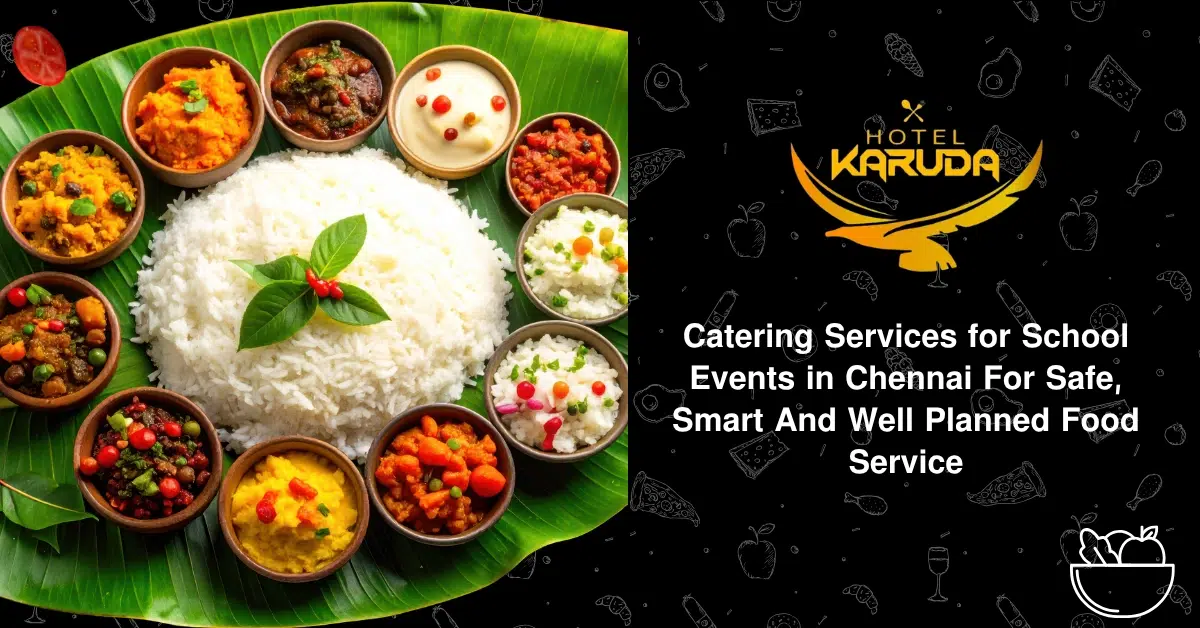
𝗖𝗮𝘁𝗲𝗿𝗶𝗻𝗴 𝗦𝗲𝗿𝘃𝗶𝗰𝗲𝘀 𝗳𝗼𝗿 𝗦𝗰𝗵𝗼𝗼𝗹 𝗘𝘃𝗲𝗻𝘁𝘀 𝗶𝗻 𝗖𝗵𝗲𝗻𝗻𝗮𝗶 𝗙𝗼𝗿 𝗦𝗮𝗳𝗲, 𝗦𝗺𝗮𝗿𝘁 𝗔𝗻𝗱 𝗪𝗲𝗹𝗹-𝗣𝗹𝗮𝗻𝗻𝗲𝗱 𝗙𝗼𝗼𝗱 𝗦𝗲𝗿𝘃𝗶𝗰𝗲
𝗜𝗻𝘁𝗿𝗼𝗱𝘂𝗰𝘁𝗶𝗼𝗻
A school event can bring hundreds of students, teachers, parents and guests into the same venue within a few hours. When food is part of the programme, the challenge is not simply preparing enough meals. The food has to be suitable for different age groups, served at the right time and managed safely in a busy school environment.
Catering Services for School Events in Chennai need a different level of planning compared with private celebrations. School organisers have to think about student-friendly menus, portion sizes, supervision, serving queues, hygiene, waste disposal and the timing of the academic or cultural programme.
Whether it is an annual day, sports day, school celebration, farewell, cultural programme or parent gathering, food planning should support the event rather than interrupt it.
𝗜𝗱𝗲𝗻𝘁𝗶𝗳𝘆 𝗧𝗵𝗲 𝗧𝘆𝗽𝗲 𝗢𝗳 𝗦𝗰𝗵𝗼𝗼𝗹 𝗘𝘃𝗲𝗻𝘁
The first step is to understand what kind of event the school is organising.
An annual day may involve students, teachers, parents and special guests. A sports day may require quick refreshments between activities. A cultural programme may need snacks and beverages during a short interval.
A school farewell can have a different food requirement from a parent-teacher gathering. Similarly, an inter-school competition may involve participants from different schools who need meals at specific times.
Once the event type is clear, the organiser can decide the menu, meal format, serving schedule and approximate quantity more accurately.
𝗣𝗹𝗮𝗻 𝗧𝗵𝗲 𝗠𝗲𝗻𝘂 𝗔𝗿𝗼𝘂𝗻𝗱 𝗦𝘁𝘂𝗱𝗲𝗻𝘁𝘀
Students should be one of the main considerations when creating a school-event menu.
Food that is excessively spicy, difficult to eat or messy to handle may not be suitable for a large student gathering. Simple dishes that can be served and eaten comfortably can make the entire food distribution process easier.
Depending on the event, options such as idli, pongal, lemon rice, curd rice, vegetable rice, chapati, sandwiches, fruit portions or suitable snacks can be considered.
The menu should also match the students’ age group. Younger children may need smaller portions and easier-to-eat food, while older students may have different preferences.
The school should communicate its menu expectations clearly to the caterer before finalising the order.
𝗞𝗲𝗲𝗽 𝗧𝗵𝗲 𝗙𝗼𝗼𝗱 𝗦𝗶𝗺𝗽𝗹𝗲 𝗔𝗻𝗱 𝗕𝗮𝗹𝗮𝗻𝗰𝗲𝗱
A school event does not necessarily need a complicated menu to impress students.
A carefully selected combination of a main item, side dish, snack or dessert and suitable beverage can often work better than a long menu with too many choices.
For younger students especially, familiar flavours may be easier to accept. For larger school gatherings, simple menus can also make serving faster and reduce confusion at the food counters.
If parents and teachers are attending the same event, the organiser can consider adding a few additional options without making the student menu unnecessarily complex.
𝗘𝘀𝘁𝗶𝗺𝗮𝘁𝗲 𝗙𝗼𝗼𝗱 𝗔𝗰𝗰𝗼𝗿𝗱𝗶𝗻𝗴 𝗧𝗼 𝗔𝘁𝘁𝗲𝗻𝗱𝗮𝗻𝗰𝗲
School events can have a large difference between the number of students enrolled and the number actually attending.
The organiser should therefore confirm the expected attendance as accurately as possible before finalising the catering quantity.
Students, teachers, support staff, parents, invited guests and event volunteers may all need to be included in the final count.
It is also important to discuss whether additional meals should be kept available. A small preparation margin may be useful when attendance is uncertain, but the quantity should be planned carefully to avoid unnecessary food waste.
A professional caterer can help estimate quantities based on the menu, age group, serving style and expected attendance.
𝗖𝗼𝗼𝗿𝗱𝗶𝗻𝗮𝘁𝗲 𝗙𝗼𝗼𝗱 𝗪𝗶𝘁𝗵 𝗧𝗵𝗲 𝗦𝗰𝗵𝗼𝗼𝗹 𝗦𝗰𝗵𝗲𝗱𝘂𝗹𝗲
School events often follow a strict timetable. A delay in food service can affect performances, competitions, prize distribution and other planned activities.
The caterer should be briefed beforehand about the full event timeline to coordinate food service smoothly with each stage of the launch.. This includes the expected arrival time of students, programme timings, meal or snack breaks and the time by which the food area should be cleared.
For sports events, refreshments may need to be available at specific intervals. For annual day programmes, food may be served before or after the main programme depending on the school’s schedule.
Good coordination ensures that students do not miss important activities because of long food queues.
𝗚𝗶𝘃𝗲 𝗙𝗼𝗼𝗱 𝗦𝗮𝗳𝗲𝘁𝘆 𝗦𝗽𝗲𝗰𝗶𝗮𝗹 𝗔𝘁𝘁𝗲𝗻𝘁𝗶𝗼𝗻
Food safety becomes especially important when meals are served to a large number of children.
The school and catering team should have clear arrangements for ingredient handling, food preparation, transportation and serving. Cooking and serving areas should be kept clean, and prepared food should be protected from unnecessary exposure.
The catering team should also know how long food will need to remain available during the event. This helps them plan preparation and replenishment appropriately.
Serving staff should maintain clean food counters and avoid unnecessary handling of ready-to-eat items.
For school organisers, choosing a caterer with proper food-handling practices is an important part of event planning.
𝗢𝗿𝗴𝗮𝗻𝗶𝘀𝗲 𝗦𝘁𝘂𝗱𝗲𝗻𝘁-𝗙𝗿𝗶𝗲𝗻𝗱𝗹𝘆 𝗙𝗼𝗼𝗱 𝗦𝗲𝗿𝘃𝗶𝗰𝗲
The food may be excellent, but the serving arrangement can still create problems if hundreds of students reach the same counter at once.
Schools should plan how students will move toward the food area. Different classes or groups can be given staggered serving times when practical.
Multiple serving points may help reduce queues during larger events. Clearly organised counters can also make it easier for students to understand where to collect their meals.
Younger children may require additional supervision during meal service. Teachers or assigned staff can help maintain orderly movement and ensure students receive their food safely.
𝗣𝗹𝗮𝗻 𝗦𝗲𝗽𝗮𝗿𝗮𝘁𝗲𝗹𝘆 𝗙𝗼𝗿 𝗣𝗮𝗿𝗲𝗻𝘁𝘀 𝗔𝗻𝗱 𝗦𝘁𝗮𝗳𝗳
A school event may involve several groups with different food requirements.
Students may receive a simple meal or snack, while teachers, parents and invited guests may require a different serving arrangement.
If everyone is expected to eat the same menu, the caterer still needs accurate numbers for each group. If separate menus are planned, the serving counters should be clearly identified to avoid confusion.
Special guests may also require a more formal seating and service arrangement. Discussing these requirements before the event allows the catering team to prepare staff andequipmentaccordingly.
𝗥𝗲𝗱𝘂𝗰𝗲 𝗙𝗼𝗼𝗱 𝗔𝗻𝗱 𝗣𝗮𝗰𝗸𝗮𝗴𝗶𝗻𝗴 𝗪𝗮𝘀𝘁𝗲
Large school events can generate significant food and packaging waste if the catering arrangement is not planned carefully.
The first step is to provide a realistic attendance estimate. The menu should also be selected according to what students are likely to consume rather than simply increasing the number of dishes.
If packed meals are used, the organiser should consider the type and amount of packaging required. Clearly planned waste collection points can help keep the school premises clean during the event.
After the function, leftover food should be handled according to the school’s arrangements and applicable food-safety considerations rather than being left unattended.
Reducing waste can make the event more responsible while also helping the organiser use the catering budget more efficiently.
𝗖𝗵𝗼𝗼𝘀𝗲 𝗧𝗵𝗲 𝗥𝗶𝗴𝗵𝘁 𝗦𝗰𝗵𝗼𝗼𝗹 𝗘𝘃𝗲𝗻𝘁 𝗖𝗮𝘁𝗲𝗿𝗲𝗿
School catering requires more than the ability to cook food in large quantities.
The caterer should understand the importance of punctual service, hygiene, student-friendly menus and organised crowd management.
Before confirming the catering service, the school should discuss the expected number of students, teachers, parents and guests. The organiser should also explain the venue layout, event schedule, menu preferences and serving method.
It is useful to clarify whether the quotation includes delivery, serving staff, equipment, setup and cleaning. Knowing these details beforehand can prevent confusion on the event day.
𝗖𝗵𝗲𝗰𝗸 𝗧𝗵𝗲 𝗩𝗲𝗻𝘂𝗲 𝗕𝗲𝗳𝗼𝗿𝗲 𝗙𝗶𝗻𝗮𝗹𝗶𝘀𝗶𝗻𝗴 𝗧𝗵𝗲 𝗖𝗮𝘁𝗲𝗿𝗶𝗻𝗴
The school venue can influence almost every part of the food arrangement.
The organiser should identify where food will be prepared or delivered, where serving counters can be placed and where students will sit and eat.
Access for catering vehicles should also be checked. If the kitchen or serving area is far from the main event location, the catering team needs to know this before planning transportation and staff movement.
Water availability, electricity, tables, waste collection and cleaning arrangements should also be confirmed in advance.
A short venue inspection can reveal practical issues that may not be obvious when discussing the event only over the phone.
𝗣𝗹𝗮𝗻 𝗧𝗵𝗲 𝗖𝗮𝘁𝗲𝗿𝗶𝗻𝗴 𝗜𝗻 𝗔𝗱𝘃𝗮𝗻𝗰𝗲
School events usually involve multiple people and multiple schedules. Leaving food arrangements until the last moment can make coordination unnecessarily difficult.
Start by confirming the event date, type of programme, expected attendance and meal requirements. Then finalise the menu and serving format.
Once these details are decided, share the school schedule and venue instructions with the caterer.
A designated school coordinator should remain available to communicate with the catering team before and during the event. This creates a clear point of contact if attendance or timing changes.
𝗖𝗼𝗻𝗰𝗹𝘂𝘀𝗶𝗼𝗻
Catering Services for School Events in Chennai require careful planning because the food needs to work around students, staff, parents, schedules and a busy school environment.
A suitable menu should be easy to eat, practical to serve and appropriate for the age group. Accurate attendance planning can help control quantities, while organised serving points can reduce queues and keep the event moving.
Food safety, hygiene, venue access and waste management should also be considered before the catering arrangement is finalised.
With clear communication between the school and catering team, food can become a smooth part of the event rather than an additional challenge for teachers and organisers.
Need Catering Support for Your Office Meetings?
Contact Karuda Hospitality today for premium corporate catering services in Tambaram.
FAQs
What food is suitable for school events?
Simple, familiar and easy-to-eat dishes can work well for school events. The menu should be selected according to the students' age group, event type and duration.
How can schools manage food queues?
Schools can use multiple serving points, staggered meal timings or organised student groups to reduce crowding around the food counters.
Should parents and teachers be included in the catering count?
Yes. Students, teachers, support staff, parents, volunteers and invited guests should all be included when estimating the required food quantity.
Why is food safety important for school catering?
School events may involve a large number of children, so careful ingredient handling, preparation, transportation and serving practices are important.
Can packed meals be used for school events?
Yes. Packed meals can be practical for certain school programmes, especially when students need to eat in different locations or within a limited time.
What should schools discuss with a caterer before booking?
Schools should discuss the guest count, student age groups, menu, event schedule, venue, serving method, staff requirements, equipment and cleaning arrangements.
How can schools reduce food waste during events?
Accurate attendance estimates, practical menus, sensible portions and organised distribution can help reduce unnecessary food and packaging waste.
Hotel Karuda
For Booking
Contact
+91 80562 78333, +91 99402 85404
No. 3, vaithiyalingam salai,
Bharathiyar Nagar,
Rajendran Nagar,
Neelankarai,
Chennai – 600115
